“I can only control
what I can measure”
Henkel Management Board member Sylvie Nicol on integrated sustainability as a driver for permanent innovation.
03/2026
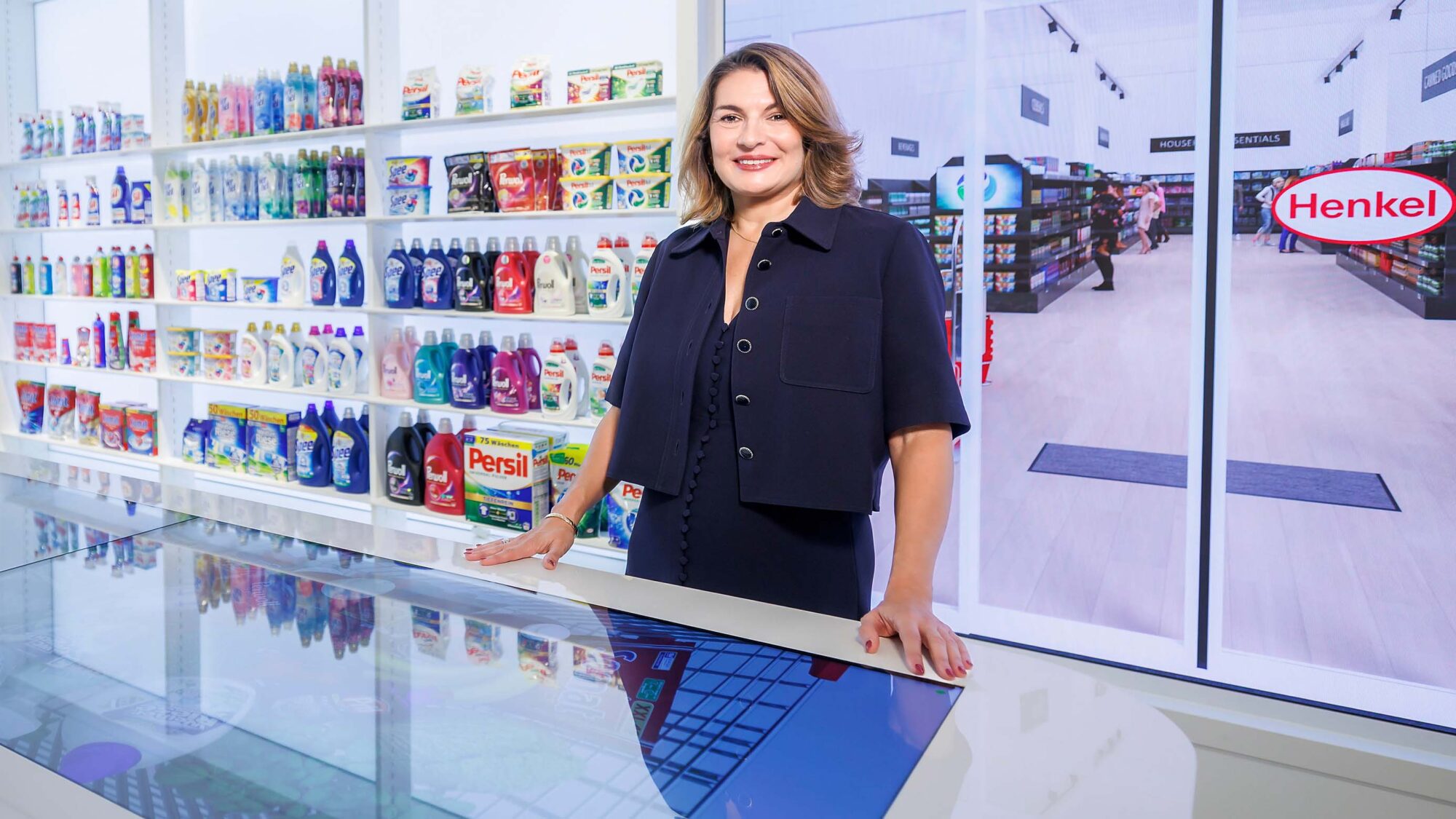
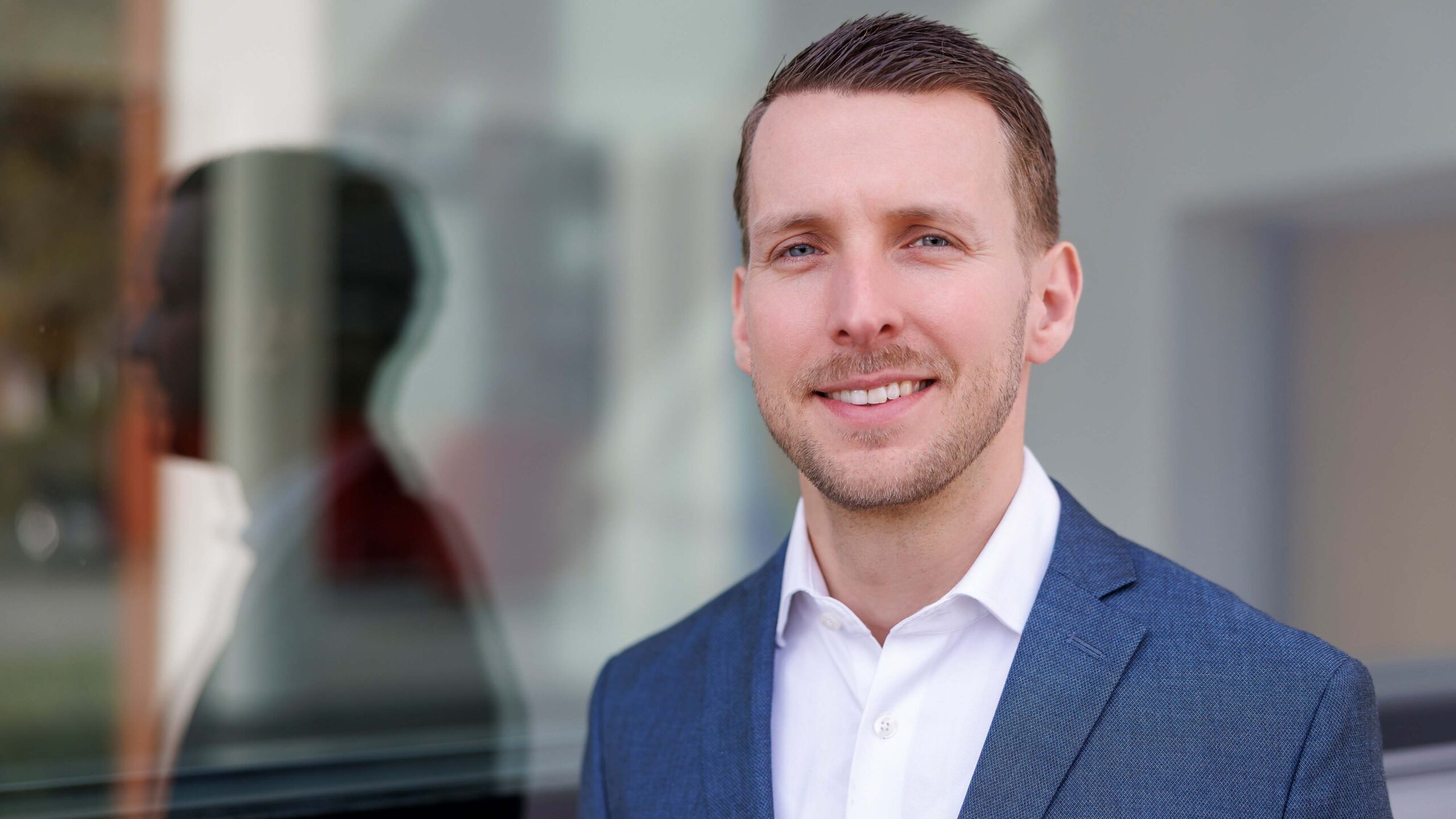
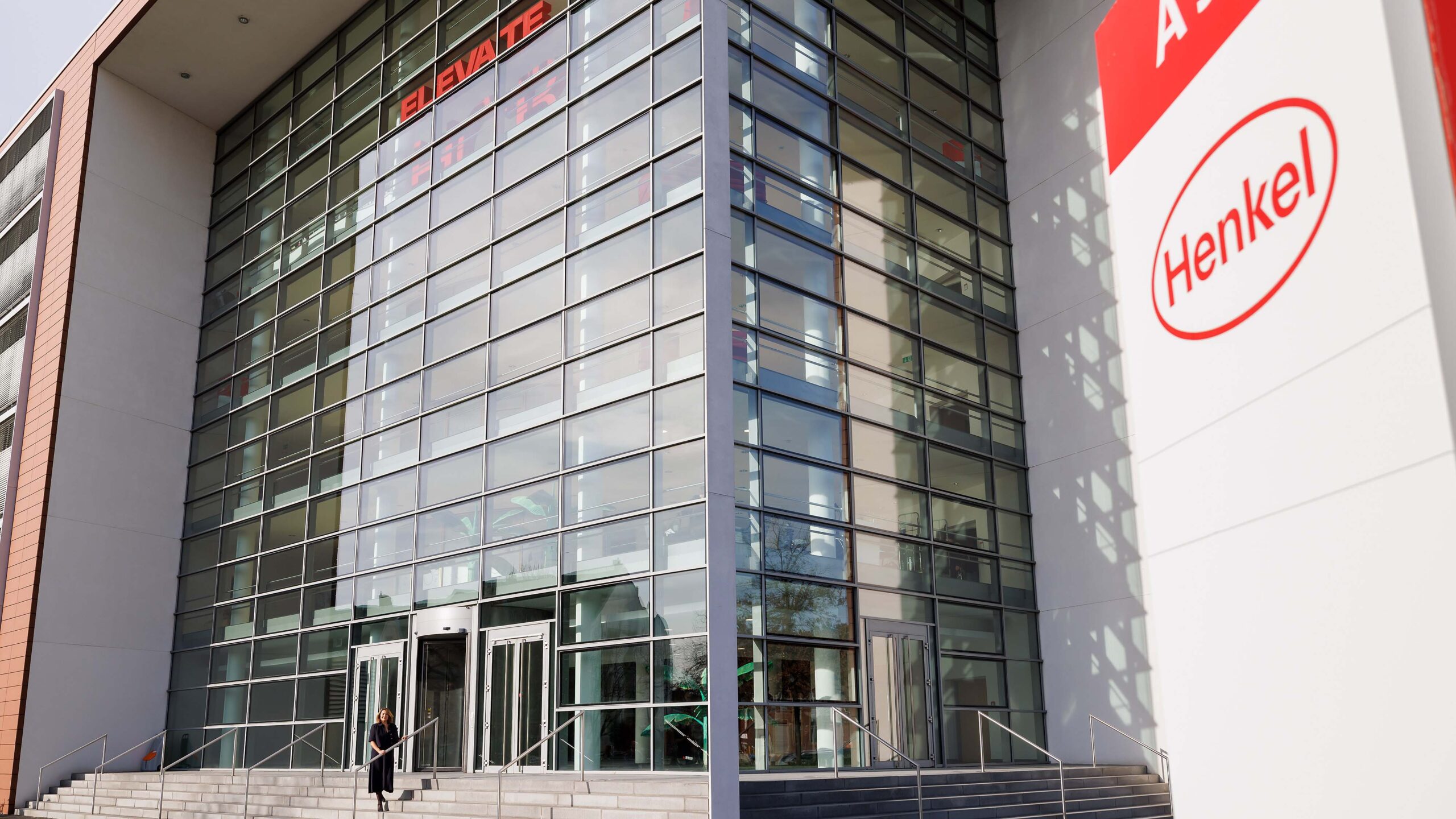
It is a pleasure to meet Sylvie Nicol. More on this in a moment. We are meeting the top manager in the Holthausen district in the south of Düsseldorf. Since 1900, it has been the home and heart of Henkel, manufacturer of the world-famous Persil detergent, among other products. An institution. Henkel has also been Sylvie Nicol’s professional home for three decades. In 1996, at the age of 23, the charismatic Parisian started working for Henkel France as a marketing manager in what was then the Beauty Care division. After holding various high-level positions in the Group, she has been a member of the Management Board since 2019 and is responsible for Human Resources (47,000 employees), infrastructure, and sustainability.
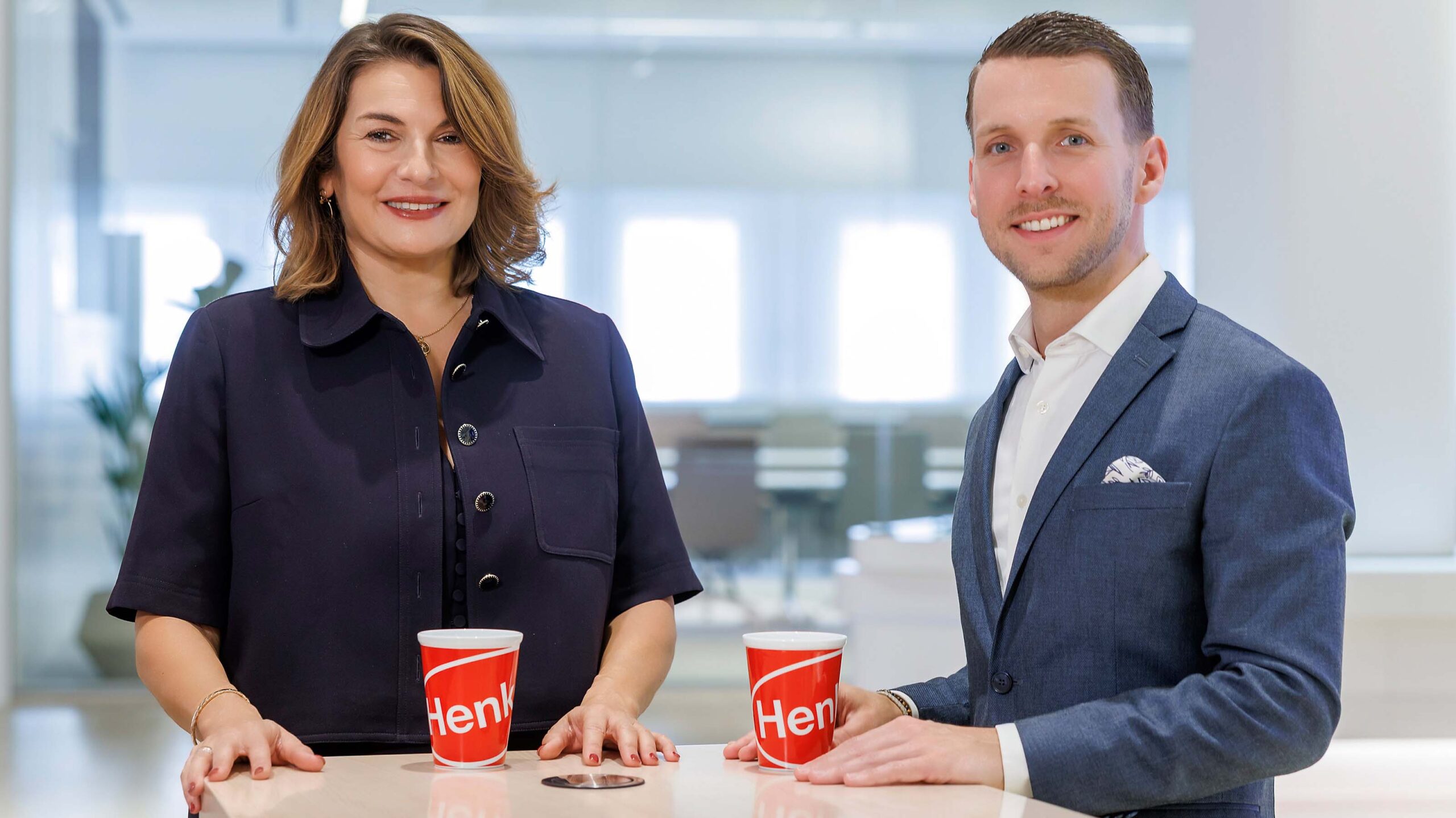
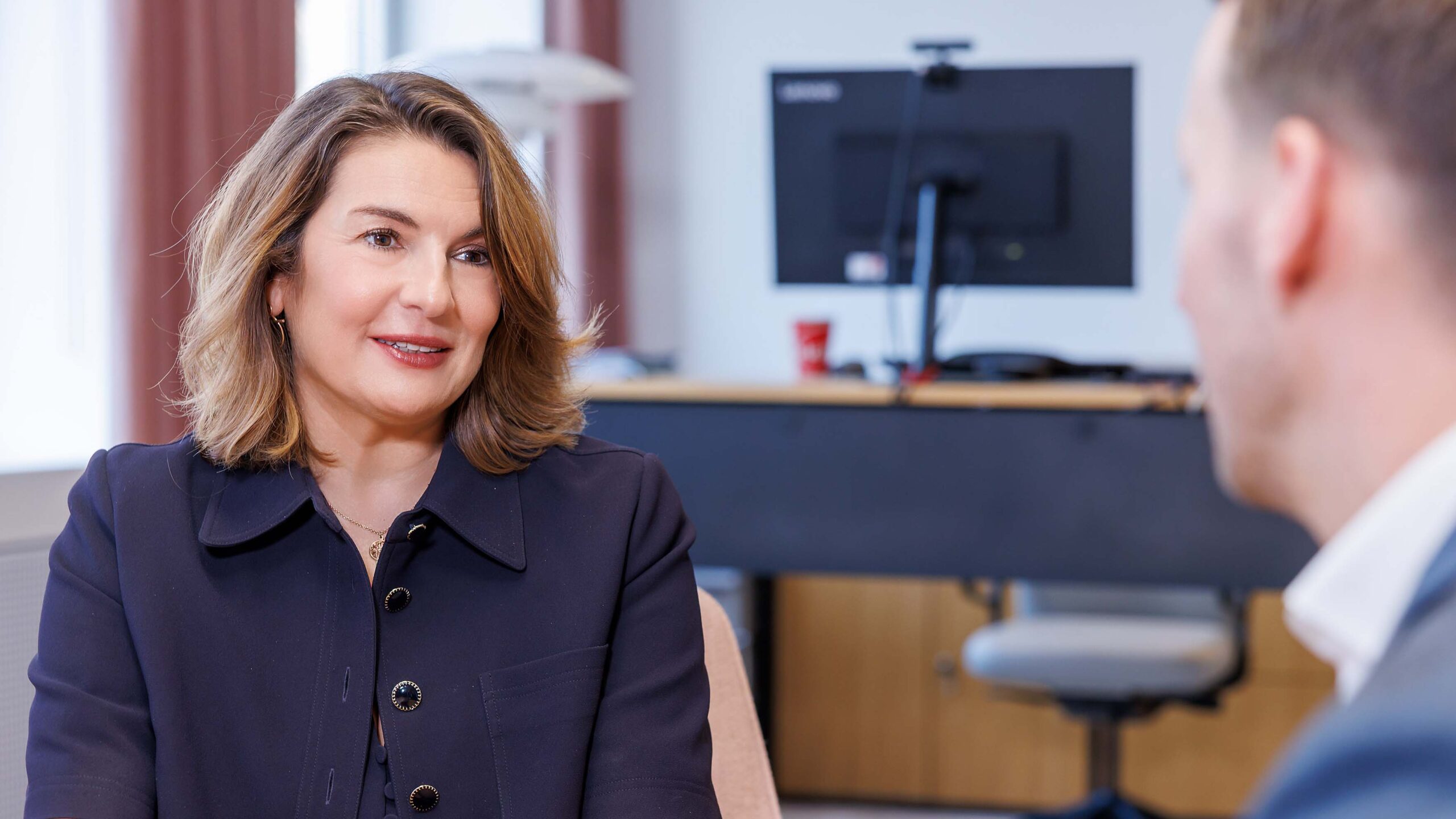
A small white cup of espresso is all she brings to the interview with Dr. Tim Dereymaeker (Associate Partner, Porsche Consulting). She already has everything else she needs with her anyway: good humor, elegance, eloquence. And passion: “Please interrupt me if I talk for too long,” says Nicol and laughs. “You drive; I will follow.” You can tell she likes being around people. Which she has to be and wants to be. The areas in her remit require this, especially when it comes to personnel matters. The same goes for sustainability as well. And that’s what we want to talk about today.
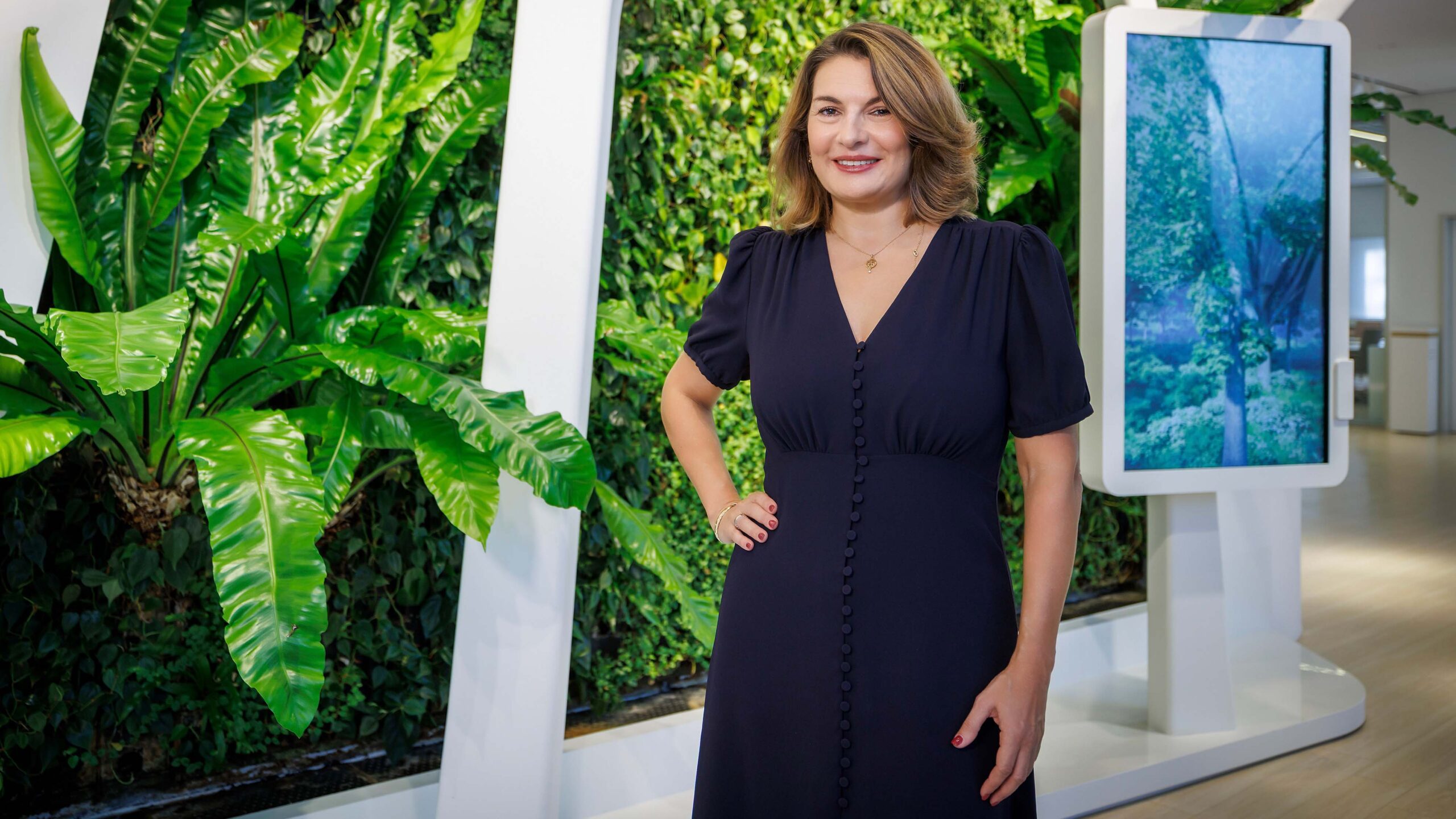
First, a small digression. Henkel states its mission as follows: “With our pioneering spirit, our knowledge, our products and technologies, we want to enrich and improve the lives of billions of people every day – and shape a viable future for the next generations.” The Group has integrated sustainability as a central element of its vision of the future. Henkel wants to “actively drive the transformation to a sustainable economy and society, help protect and regenerate nature, contribute to strong communities, and strengthen the trust of its stakeholders.” The “2030+ Sustainability Ambition Framework” divides the long-term ambitions into three dimensions: nature, community, and partners.
Sylvie Nicol is keen to ensure that the mission and vision can be taken to heart by everyone involved – right down to those at the very beginning of the value chain. “Our supplier could be a small local farmer, for example. We want to reach them too,” says the board member. When it comes to sustainability in particular, it is important to her that everyone has their goals in mind. And she has a strong symbol to remind her of this. An unmissable, thick, glaring red arrow has been stuck on the cover of her notebook. “This,” says Sylvie Nicol, “points in the direction we are taking together.” In this interview, Nicol explains how this works.
Dr. Tim Dereymaker: The Henkel Group is known for its very ambitious goals – also when it comes to sustainability, which, alongside HR and infrastructure, falls under your remit as a member of the Management Board. How much progress have you already made?
Sylvie Nicol: In our 2022 strategy, we determined that sustainability would be an integral part of our business. This is not a sideline issue. At Henkel, we are convinced that portfolio transformation and sustainability must be tackled together. For this reason, we have developed a framework for our sustainability ambitions. This framework is closely tied to our corporate purpose “Pioneers at Heart for the Good of Generations”. And it is also linked to all business areas and functions. Our sustainability strategy is based on three central pillars: “Regenerative Planet”, “Trusted Partner”, and “Thriving Communities”. We have defined ambitions and targets for each pillar. For us, targets are everything that is backed up by figures. And ambition characterizes our transformation. In its corporate values, Henkel is committed to continuously expanding its leading role in the area of sustainability. As a pioneer, we want to drive forward new solutions for sustainable development and at the same time develop our business responsibly and successfully.
In the “Regenerative Planet” area, the big goal is to reach net zero by 2045 ...
… correct, that is the long-term goal. However, Henkel has of course also defined short-term and medium-term goals on the road to 2045. What I can already say today is: we are making enormous progress and will probably be ahead of schedule. However, this is not down to us alone. When it comes to emissions, cooperation with all our partners along the entire value chain is particularly important, especially with our suppliers. This is where the “Trusted Partner” pillar comes into play. We build bridges to our suppliers by entering into partnerships. One of the major milestones was our role as a founding member of the “Together for Sustainability” initiative, in which we worked with other companies to set standards for how we assess our suppliers and their progress. The other initiative is a bit more recent and is called “Climate Connect”. Here we support smaller suppliers on their own transformation journey.
The third pillar, “Thriving Communities”, is about the influence we have on society and communities. We strive to ensure social progress. We start with our own teams and work on diversity in our organization, for example. But we also think about our external partners and combine environmental protection with improved living and working conditions. The raw material palm oil, especially for our products in the consumer goods sector, is a good example: for more than ten years, we have been cooperating with the Solidaridad organization, which designs fair and sustainable supply chains around the world – from cotton to coffee to palm oil. In our long collaboration, we have already been able to positively influence the everyday lives of 40,000 small farmers by supporting and promoting their work. This has enabled us to ensure that more than 95 percent of our palm oil is now sustainable and traceable.
Where do you see the biggest levers on the way to increasing your sustainability balance?
The first milestone for raw materials was the assessment of the initial situation. Over three years, we went through a comprehensive program that allowed us to evaluate our entire portfolio. I am convinced that when it comes to sustainability, a clear factual basis with data and measurability are the key to making progress possible. It’s a bit like business: You can only control what you can measure. However, sustainability is even more complex than traditional business, especially when data is missing or unclean and established standards are lacking.
We now know what the footprint of our product portfolio looks like. For both business areas – industry and consumers – we can say which products already meet our requirements, which should be transformed and which should possibly even be abandoned. We also support our suppliers worldwide in providing us with the sustainable raw materials we need to reduce our footprint.
From Paris to Düsseldorf
Is profitability consistent with Henkel’s investments in sustainability? Is that even possible?
Anyone who runs a profitable business also has short-term goals that need to be achieved. And the financial market has expectations of companies like ours. In other words: wherever more investment is needed in order to achieve transformation, there is naturally room for discussion. Issues such as sustainability, digitalization, and innovation must not become adversaries. The solution is: sustainability should never be viewed in isolation. The topic must be thought of and lived holistically across the entire organization. It can then also help companies to become more innovative and competitive. If you really see sustainability as an opportunity for transformation, for competition, for market positioning, to better oneself – and not just better from an impact perspective, but truly better from a competitive perspective – then you will change direction.
For comparison: when I was still in operations, I also encountered conflicting goals between marketing and sales, between sales and the supply chain. For example, it was a question of whether stock levels were high enough to serve our customers adequately. At the same time, these stocks had to be kept low in order to achieve the supply chain targets. The quality of such discussions is improving significantly at Henkel because we are starting to see concrete business cases where sustainability transformation not only means bringing a better footprint, but also better business results. It’s obvious: if we offer sustainable solutions, then we can also come out on top in the market.
As management consultants at Porsche Consulting, we are also interested in your involvement with industrial customers and, of course, your innovations in the automotive industry. What contribution does Henkel make as a supplier?
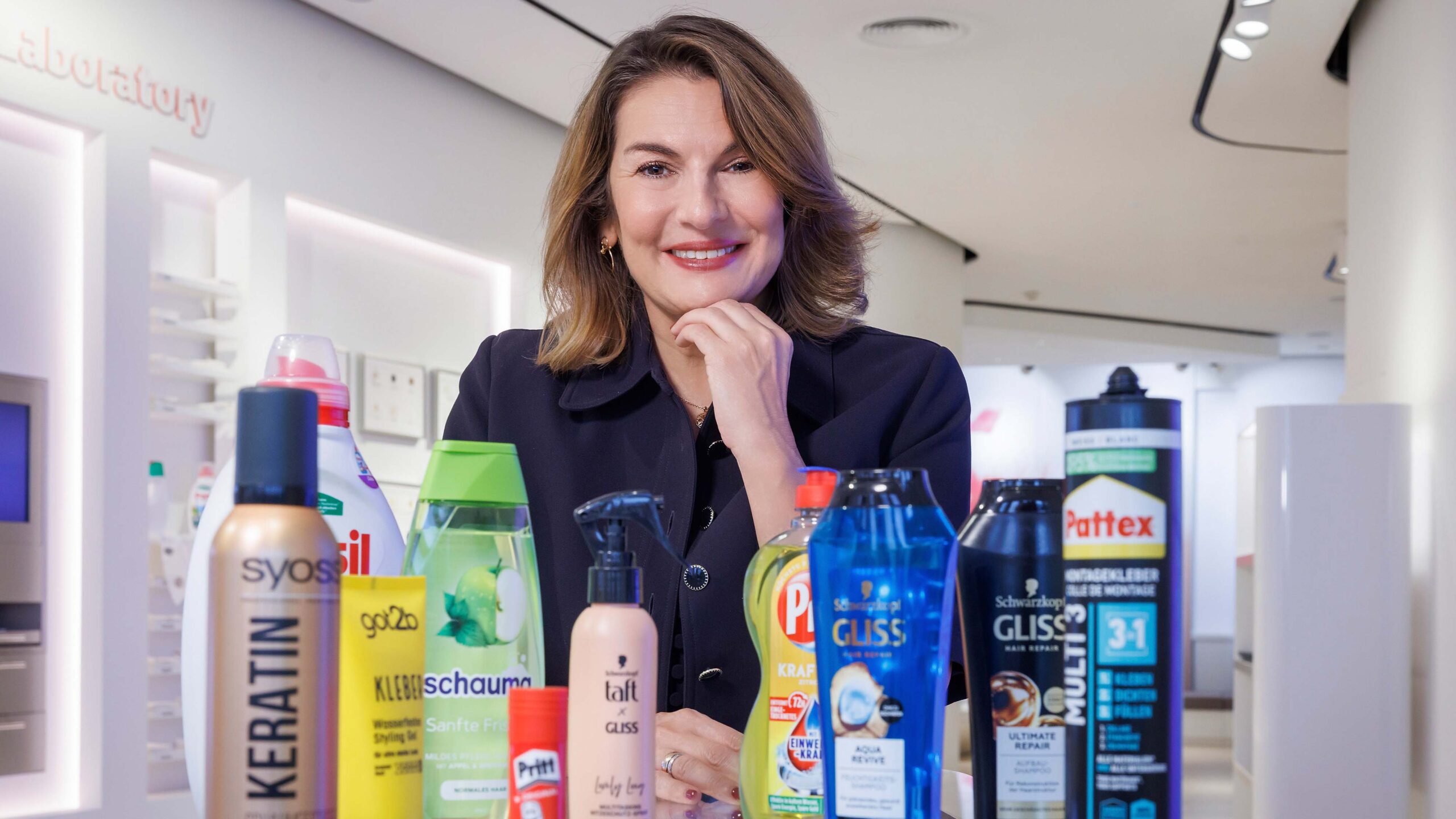
So, when most people think of Henkel, they think of our laundry detergents such as Persil, hair care products such as the Schwarzkopf series or our Pritt glue sticks, which even very young children use in kindergarten or school. However, not quite as many people are familiar with our products and solutions for industry. We are a global leader in adhesives, sealants, and surface treatments for industrial applications. This sector accounts for half of our business. We serve a wide range of industries – whether automotive, electronics, energy, aerospace, construction, textiles or medicine. Our B2B customers value Henkel in particular for its quality, advanced research, and sustainable development.
Henkel is a strong and highly recognized partner in the transformation of the automotive industry. We work together with all manufacturers. Our partnerships usually begin at a very early stage. This is how we become part of shaping innovation. That is important. Because if we really want to have an influence, we have to be there from the start. Of course, we also have to deliver innovations. And that’s what we do. In the automotive industry, for example, we support the energy-saving lightweight construction of car bodies with adhesive solutions for bonding carbon fiber parts. Current developments in the field of batteries for electric vehicles are particularly exciting. Henkel’s thermally conductive adhesives are extremely important for the thermal management of batteries. In this way, we help to prevent overheating and improve safety.
Personally, I am particularly keen on the removable adhesives. Traditionally, adhesives are supposed to bond and nothing else. That used to be the expectation. This has changed with the requirements for a circular economy that is as closed-loop as possible. Today, our removable adhesives allow components to be separated for repair, then reused or easily broken down into sorted components for efficient recycling. This is definitely a significant lever for the future and an important contribution to sustainability – across all sectors.
Whom do you feel more committed to when it comes to sustainability – the financial market or the demands of NGOs?
We are committed to both. And I’ll tell you why. I rather see the expectations of our stakeholders as complementary. The financial market expects financial performance and long-term value creation. If you want to create long-term value, you still have to exist in a few years’ time and be successful on the market. This is why most players in the financial market are paying increasing attention to our sustainability performance. Because it reduces risk. Naturally, NGOs want us to become – permanently – faster and better in terms of sustainability. That’s good. In my opinion, every company management needs to be faced with challenges. Nobody should be in their comfort zone, especially not today. That’s why I welcome it when NGOs push us to think further, bigger, and better.
How problematic are different sustainability standards and divergent regulatory conditions in different markets and nations for you? Does this result in conflicts?
One thing first: I am convinced that constantly complaining about too much regulation does not drive progress. Sustainability regulation and standards are often not yet fully developed. We are still operating in a very multi-layered environment with different regulations that are complex and not always compatible with each other. However, at Henkel, we do our best to fully meet all requirements. At the same time, we try to help shape progress. A good example is CSRD, the EU directive on sustainability reporting. For us, as for many companies, the complex implementation within a limited time was far from easy. But instead of constantly complaining, we decided to support the optimization of the directive and participate in several European Union working groups in Brussels to promote significant CSRD simplification and close any gaps identified in our practice. This is typical of the way we think and act: we don’t just want to react, we want to contribute and help shape.
Another example is China. I was there myself just recently and was deeply impressed. China is accelerating its sustainability efforts enormously and on a massive scale. Henkel is also actively involved in new standards there. For example, we supported the development of a group standard for quantifying greenhouse gases. It helps to calculate the footprint of adhesive products in the area of hot melt adhesives and water-based adhesives. We carried out this work with the national industry association China Petroleum and Chemical Industry Federation and published the standard jointly. Now these specifications are used for our Henkel products, as well as for the other market players in our industry. The overarching goal now is to establish the link between the standard in China and the standard in Europe. I am sure that, as a leading manufacturer, we can contribute a great deal to the success of this international alliance, including in the area of adhesive technology.
The powder was just the start of many innovations
Ms. Nicol, you are also responsible for human resources on the Management Board. And people are the most important asset of any company. I would say that sustainability starts with people and only works together with all employees. Does this also apply to Henkel?
Of course. And personally, I am happy to be working at the interface between sustainability and people in my job. Incidentally, all my colleagues on the Management Board also bear responsibility for sustainability. My focus is on coordination, but everyone on the Management Board is responsible for sustainability, especially the operating divisions. Naturally, in my role, I can ensure a great connection to the social aspect of sustainability. When we developed and communicated our sustainability strategy in 2022, it included newly developed training programs to train and involve employees on a voluntary basis. Over the following three years, 11,000 Henkel employees completed this training. And did so out of genuine interest. This shows how motivated our colleagues are. That makes me really proud.
Constant upskilling is essential, as is personal commitment. It is very important to me that all employees at Henkel have the feeling that they can make a personal and individual contribution: HR staff on the social aspect, procurement colleagues for Trusted Partners, employees in marketing and in research and development on portfolio transformation in the Regenerative Planet area. We try to ensure that our strategy serves as a basis for our teams in the various organizations of the Group to develop their own programs to help Henkel achieve its key objectives. Uniting all teams worldwide behind collective goals is the way for us to achieve this. We benefit from clever ideas from all parts of the workforce. Anyone can take part, even if they don’t have the specialist knowledge to implement it. For people who may have a great idea but limited access to resources or decision-makers, Henkel has an incubator program. It helps to make such ideas first visible and then realizable. This instrument is very valuable.
Are such ideas limited to a thematic framework?
It’s not just about the environment, but also about people and society, innovation, value creation, and the long term. If employees are to be actively involved, managers must succeed in reducing the complexity of this multi-layered issue as much as possible. We have to show people what contribution they can make to sustainability with their work. It’s about the progress that we all want to drive forward together. We focus on flexible thinking. This is more important than achieving long-term targets down to the last decimal point.
Taking employees with you is one thing. Customers are another. How do you maintain loyalty to the brand and the products?
The impact we have as a company is determined by the products we bring to market. It is therefore about how we drive forward our portfolio transformation to the greatest possible extent – using all the collaborations and partnerships that we have already launched. This is decisive for how our customers perceive Henkel. We want them to choose us because we have the best performing products that are also sustainable. What I can say is that there is no contradiction between performance and sustainability. If our customers choose us for both, then we are still on the right track.
Thinking ahead and taking responsibility