This Airport
Thinks Ahead
When a major international airport and its largest airline pursue the common goal of greater customer orientation, passengers can benefit noticeably. Germany's largest airport and Lufthansa want to send out a clear signal here – supported by artificial intelligence.
12/2025
An airport terminal is not an inviting place to linger. People waiting there want to move on as quickly and smoothly as possible. Whether families, business travelers or transfer passengers – everyone is looking for the fastest way to the right gate. What is part of every flight for travelers is an enormous logistical challenge for the airport. Behind the seemingly smooth process lies a highly complex operation. Every day of travel involves thousands of decisions: When does which gate open? How many employees are needed at check-in? Where is the boarding process at risk of slowing down?
Frankfurt Airport is Germany’s largest air traffic hub and one of the most important airports in Europe. Around 29.1 million people passed through Frankfurt Airport in the first half of 2025. In June 2025 alone, the airport counted 5.8 million passengers – a new record since the COVID-19 pandemic. But the figures cannot hide the challenges. While holiday flights within Europe are booming, the long-haul business remains tense. Travel to the Middle East is declining, Asia is stagnating and air freight is faltering. At the same time, Frankfurt is competing with other European airport hubs such as Amsterdam, Paris, London or Istanbul and struggling with higher taxes and stricter operating regulations.
What used to be manageable with experience, gut feeling and generously planned personnel deployment is now reaching its limits. Every passenger brings movement into the system and with it a multitude of decisions that have to be made in the background. The processes at the airport are complex, the requirements dynamic. There is a demand for intelligent systems that make operations more flexible, efficient and foresighted.
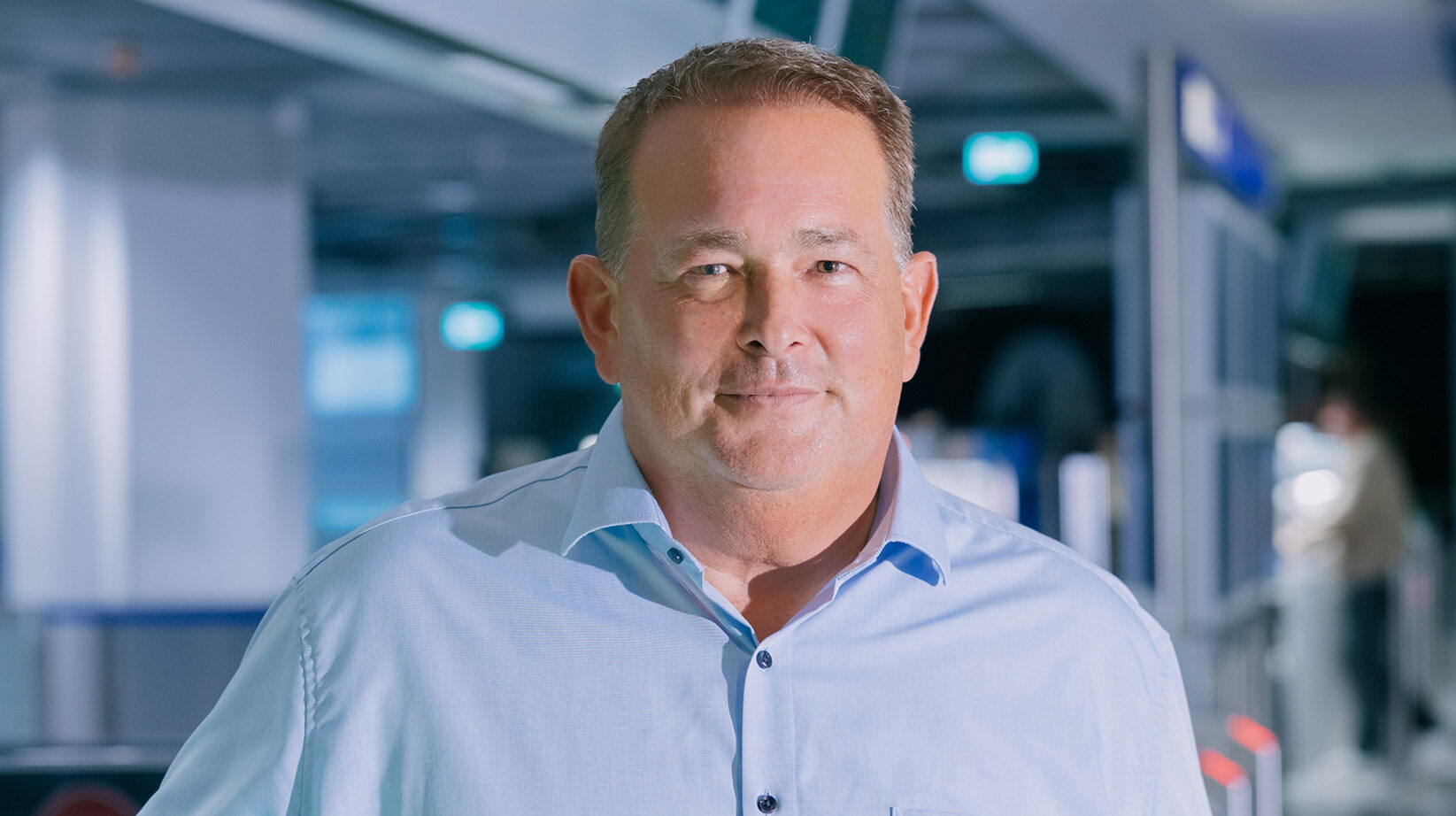
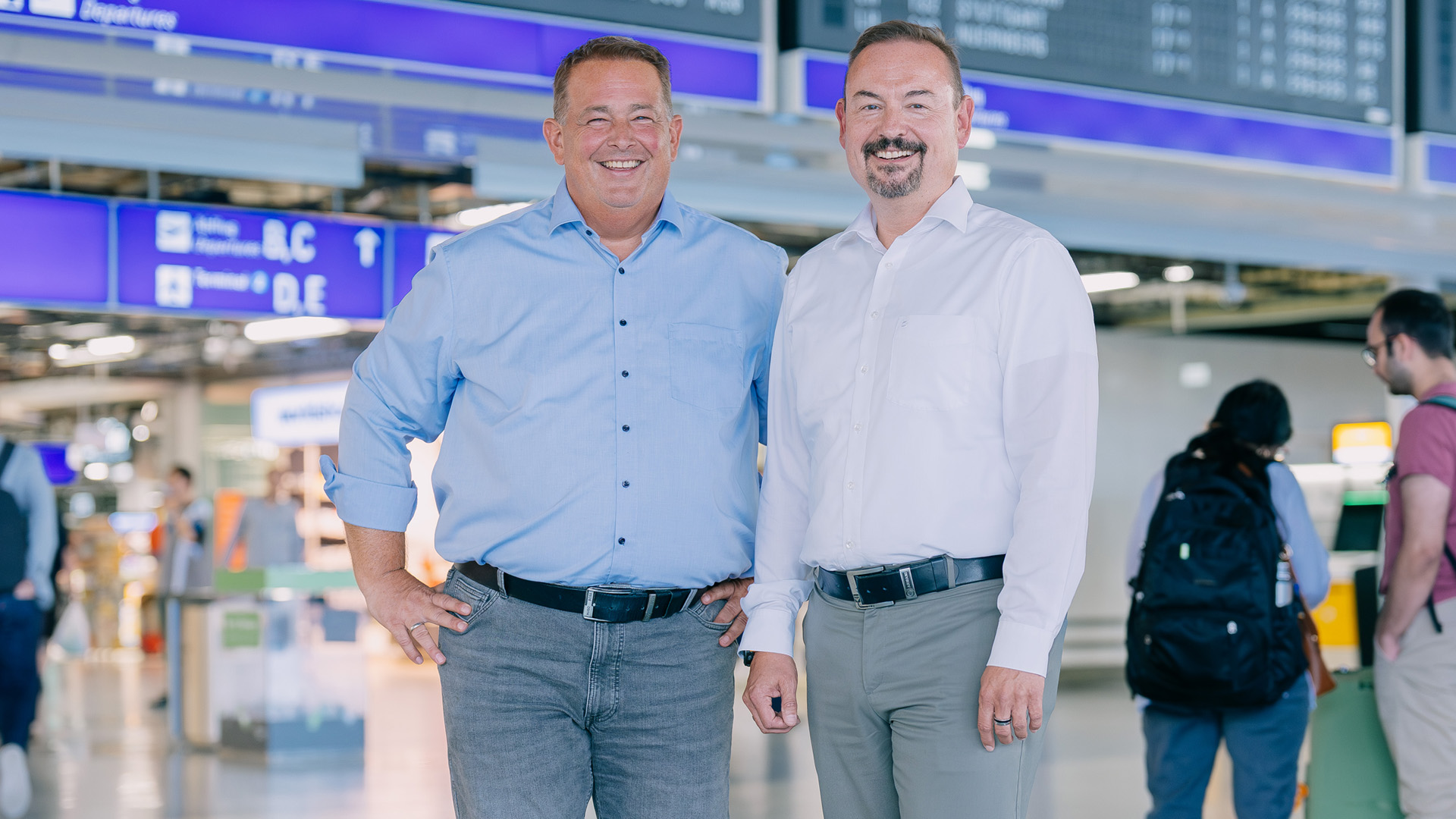
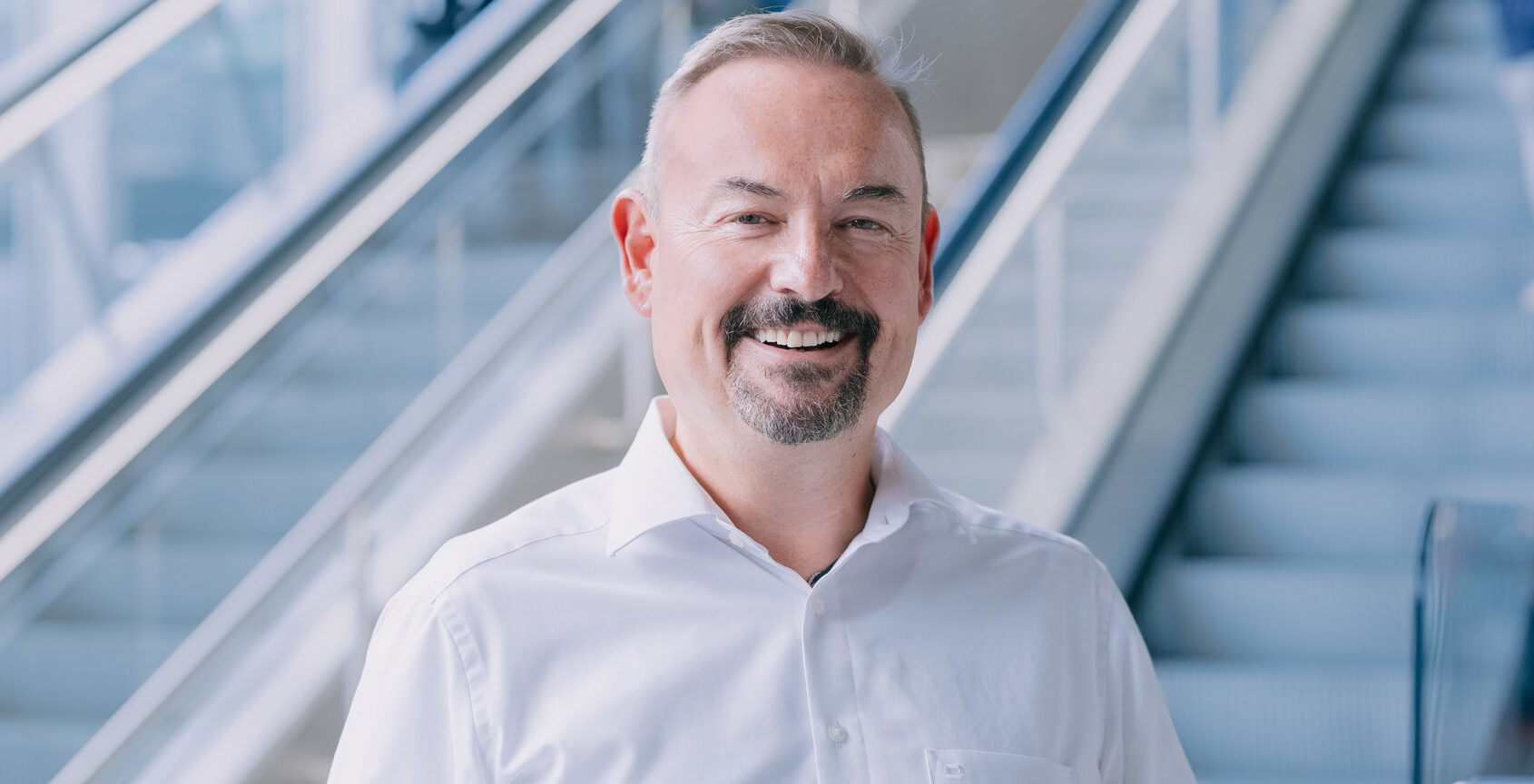
But how can you control when a gate opens, where bottlenecks form at boarding due to too much hand luggage and how many check-in staff are in the right place at the right time? FraAlliance is collaborating with Fraport, the operator of Frankfurt Airport, and Lufthansa to address such issues. The joint venture between Lufthansa and Fraport brings artificial intelligence (AI) to where it makes the biggest difference: daily routine at an international hub. And it does this not as an abstract concept, but as a tool that makes processes transparent, identifies bottlenecks and proposes solutions. “We were founded to improve product and service quality at Frankfurt Airport,” says Jörg Harnisch, Managing Director of FraAlliance GmbH. “To this end, we develop innovations and test new technologies.” The focus is on the needs of travelers. “They determine our actions and, of course, we are judged by where we have been able to improve service for passengers,” says Harnisch.

Digital twin as a pioneer at the airport
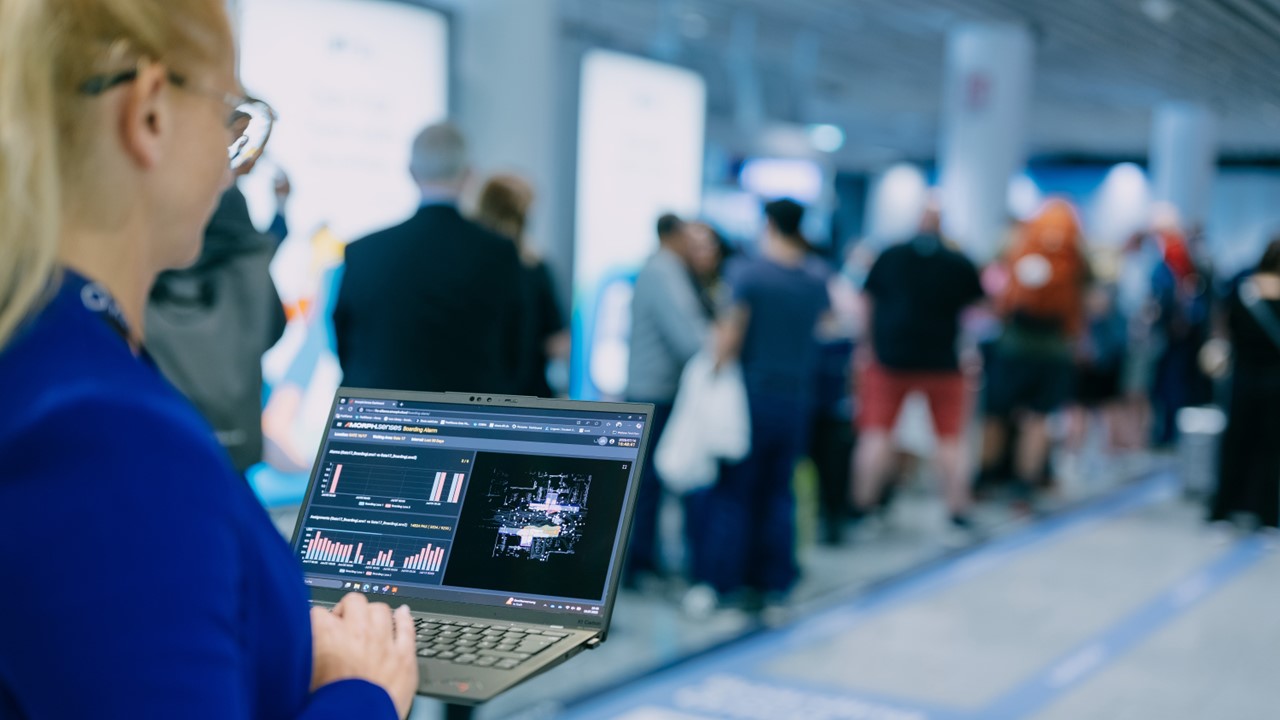
The example of overloaded cabin baggage compartments shows how AI can be put to good use. Long queues often form on board because passengers carry on more than is allowed. The solution: a system that recognizes the amount of luggage in real time. “The algorithm distinguishes between trolley, backpack, personal item, and person,” explains Skrolan Kopka, Head of Consulting and Strategy at FraAlliance. The system sounds the alarm before things get tight and is designed to help deploy staff for hand baggage management even before the start of time-critical boarding. FraAlliance shows how innovation and responsibility can be combined.
Technology can also provide support during boarding in the future. Initial tests are currently being carried out to see how sensors can detect movement patterns in the terminal. AI can then use this to deduce how flows of people can be better managed, for example, with alternative routes for passengers in a hurry. Digital displays can show passengers the best route. This turns unforeseen events into a controlled flow. The big goal in sight: a complete image of the airport in real time. Aircraft, luggage carts, passengers – everything is recorded and networked. What is called a “digital twin” maps the entire operation of the airport. It simulates processes, detects hitches and suggests solutions. What happens if a flight is delayed? How can transfer times be shortened? Which paths are free, which are overloaded? The system provides the answers – before the questions are even asked. In this way, the airport is not only controlled, but also understood. If you can recognize patterns, you can be proactive instead of just reacting.
Smart solutions – added value for customers
“We want transparency about what happens in the terminal. In particular, we take a closer look at the transfer process. How do passengers move through the building, how long and where do they stay and what can we deduce from this?” asks Dirk Schusdziara, Managing Director of FraAlliance. We are already testing how the boarding process can be accompanied digitally at gates A16 and A17. What is called Lidar sensor technology is used here. With the help of lasers, distances can be measured precisely in real time and movements in the surroundings can be detected. For example, the technology recognizes when movement is slowed – and for security reasons, it provides information if two passengers pass through the boarding gate at the same time instead of one after the other.
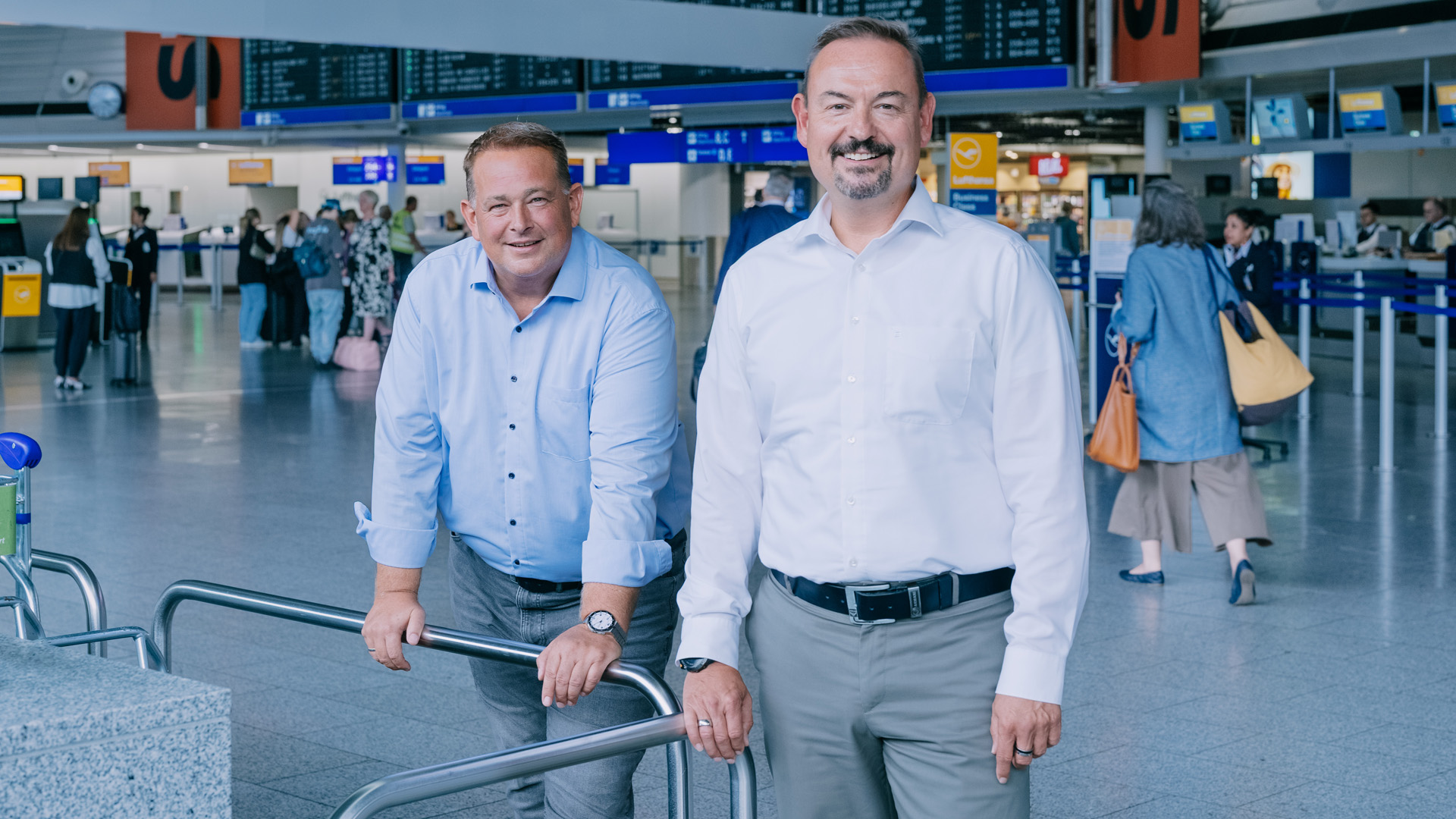
What makes FraAlliance special: It connects what used to be separate. Airlines and airport operators now work hand in hand and all access the same data platform. Decisions are made faster and processes run more smoothly. The goal: a smart airport that thinks for itself. “There are many small application examples that we want to eventually link together,” says Schusdziara. FraAlliance shows how digitization becomes tangible. Not as a buzzword, but as a tool. Not someday, but now. If you want to experience what the airport of the future will look like, you don’t have to travel far. A visit to Frankfurt is enough.
Effective transformation means: Rethinking completely!